
What Is The Plot Of Dandadan? The Core Setup in 60 Seconds
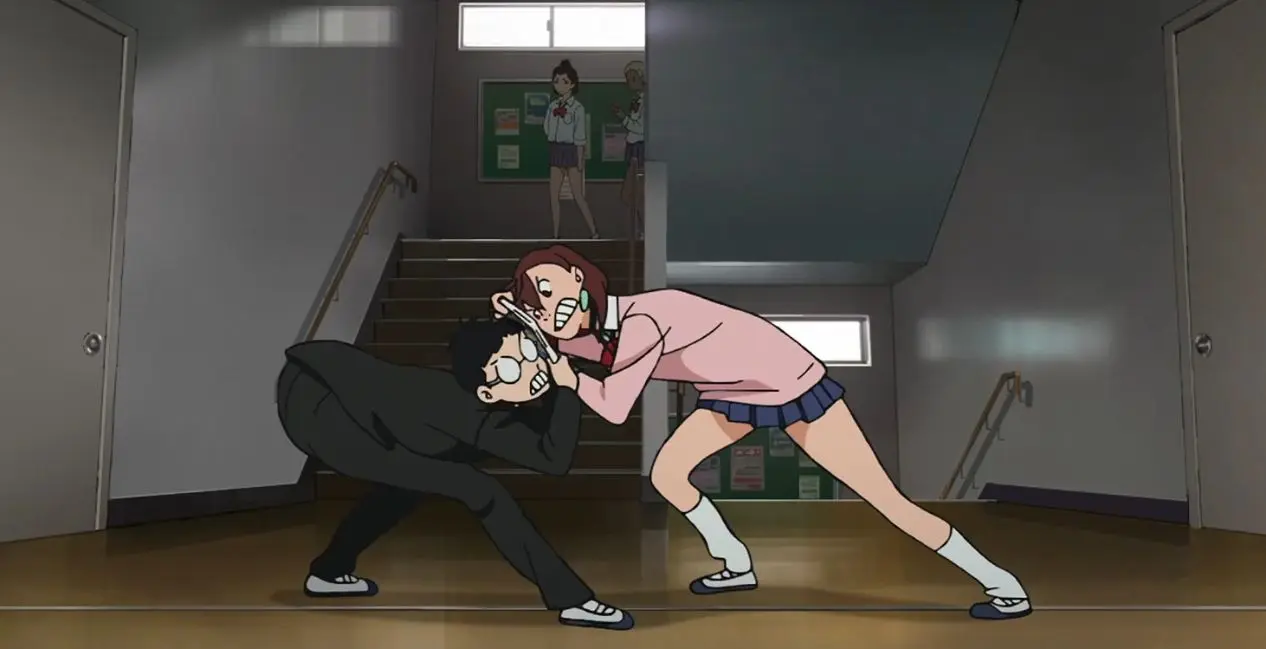
Dandadan’s plot starts with a perfect, simple conflict: Momo Ayase believes in ghosts but not aliens, and Ken “Okarun” Takakura believes in aliens but not ghosts. Both are stubborn. Both are lonely in different ways. And both are about to be proven right in the worst possible manner. Their “proof” is not academic, it is a dare. They split up to visit two different hot spots: one linked to UFO lore, the other linked to occult rumors. That decision triggers the series’ central thesis: the supernatural is not one lane. It is a crowded highway.
From there, the plot becomes a hybrid of action shonen, supernatural thriller, and romantic comedy. Momo awakens latent psychic abilities after a traumatic encounter, while Okarun becomes entangled with a curse that physically changes him and forces him into constant danger. The two are immediately bonded by shared secrecy and shared terror, which turns into chemistry through banter, mutual rescue, and the slow realization that they make each other braver.
If you want the “one line” plot summary: two teens become paranormal fighters because both aliens and yokai decide to ruin their lives at the same time. Everything that follows is escalation: more entities, more rules, more allies, and more emotional consequences. Many fans also reread the early chapters on ComicK because the opening is packed with setup that only makes sense after you have seen how the story’s rules evolve.
Event Cluster 1–3: The Bet, The Abduction, and the Curse That Starts Everything
Dandadan clicks when you understand its first three events as a single chain reaction, not three separate gimmicks. These are the story’s ignition points.
Event 1: The “Ghosts vs Aliens” Challenge
Momo and Okarun’s argument is not just a joke; it establishes the series’ logic. Each character is sure the other is naive. Each believes their worldview is the mature one. That pride drives them into danger. It is a classic coming-of-age setup: teenagers testing identity through belief, then finding out the universe is much bigger than their confidence.
Event 2: Momo’s Alien Encounter Unlocks Psychic Power
Momo’s confrontation with extraterrestrial threat is the moment Dandadan reveals its tone: funny on the surface, genuinely intense underneath. The plot uses the alien encounter to “unlock” her abilities, turning her from skeptical teen into active combatant. This is not a slow burn power fantasy. It is a forced evolution.
Event 3: Okarun’s Run-In With a Curse Changes His Body and Fate
Okarun’s side of the bet collides with yokai horror. He does not just see something. He is marked by it. The curse becomes a running plot engine because it creates a persistent problem that cannot be ignored, a vulnerability that keeps dragging the duo into new confrontations.
These three events set the story’s rhythm: belief leads to exposure, exposure leads to power, and power leads to new danger. Once you see that structure, the rest of the plot stops feeling random.
Event Cluster 4–6: Powers, Rules, and the First True “Team” Formation
After the inciting chaos, Dandadan pivots into a crucial phase: it teaches you the rules without pretending the rules are stable. This is where the plot becomes addictive, because each new fight is also a lesson about how the world works.
Event 4: Okarun’s Turbo-Style Form Becomes a Double-Edged Weapon
Okarun’s curse is not only a handicap. It becomes a source of speed and combat capability, but it also imposes limits and risks. That tension gives the story an internal clock: power is useful, but it is also dangerous. In many shonen series, a transformation is purely empowering. Here, it is also alarming.
Event 5: Momo’s Psychic Toolkit Develops Through Stress, Not Training
Momo’s abilities lean into telekinesis and pressure-based control, often revealed in moments when she has no time to hesitate. The plot does not treat her powers like a clean “level up” ladder. Instead, it frames them as a survival response, which makes the action feel urgent rather than ceremonial.
Event 6: Seiko’s Presence Turns Chaos into a Framework
The story introduces a stabilizing adult influence through Momo’s grandmother, who brings exorcist competence, occult knowledge, and “I have seen worse” energy. This does two things: it gives the kids a base of operations, and it allows the plot to expand without collapsing into nonsense. When Seiko enters the narrative, Dandadan gains a structure for rituals, talismans, spirit rules, and protection strategies.
This cluster transforms the plot from “two kids get wrecked by weirdness” into “two kids fight back, with rules, allies, and escalating enemies.”
Event Cluster 7–8: New Allies, Rivalries, and the Emotional Engine

Dandadan is not only carried by fights. It is carried by relationships, and two key events make the story feel like a real long-running series rather than a one-note gimmick.
Event 7: Classmates Become Wildcards, Then Become Family
As the cast expands, the plot introduces characters who initially feel like rivals, nuisances, or misunderstandings. Then, slowly, those characters become essential. This is the series’ ensemble strategy: it introduces people through conflict, then redeems them through shared survival. The result is a found-family vibe where alliances are messy, loud, and emotionally real.
Event 8: Romance Tension Becomes a Plot Driver, Not a Side Dish
Dandadan’s romantic comedy elements are not a decorative subplot. They actively affect choices. Jealousy changes tactics. Concern becomes motivation. Embarrassment becomes a battlefield. The plot repeatedly uses teen chemistry as fuel for action, which is why even “filler-feeling” scenes often matter. A look, a line of banter, or a protective impulse can set up the emotional logic that pays off during the next supernatural crisis.
This is also where Dandadan’s tone starts to feel intentional rather than chaotic. Comedy is not interrupting the story; it is building intimacy. Horror is not random; it is stress-testing bonds. If you want to see how carefully the early dynamics are planted, many readers re-check key banter-heavy chapters on ComicK, because the character writing is often doing quiet work underneath the absurdity.
Event Cluster 9–10: The Cursed House and Evil Eye Shift the Story Darker
At a certain point, Dandadan pivots from “paranormal chaos” into something more unsettling: a plotline that feels like a classic Japanese horror scenario, but with sci-fi weirdness still in the bloodstream. This is where many viewers realize the series is not just goofy and loud. It can get genuinely dark.
Event 9: A Haunted Location Turns the Plot Into Mystery Horror
The story introduces a cursed environment where the rules feel more claustrophobic. Instead of an open-ended chase, the characters face a location that traps them in a narrative puzzle. The tension shifts from “can we outrun the threat?” to “can we understand what this place wants from us?” This is a different kind of fear, and it expands Dandadan’s genre range.
Event 10: Possession and the “Evil Eye” Energy Raise Personal Stakes
When a supernatural force targets a character’s identity, the plot becomes more intimate. Possession stories are inherently psychological: who is in control, what memories are real, what choices still belong to the person. Dandadan uses that intensity to deepen its cast and to test the group’s loyalty. It also reframes earlier chaos as preparation, because now the danger is not only physical. It is existential.
This cluster is where Dandadan stops feeling like “monster-of-the-week” and starts feeling like an evolving mythos. The series uses horror to mature its themes, especially around fear, trust, and the cost of power.
Event 11: The “Aliens vs Yokai” Thesis Finally Locks Into Place
The plot of Dandadan can feel overwhelming until you see its hidden simplicity: the series is about competing explanations for the unknown. Aliens represent cold intrusion, technology, experimentation, and cosmic threat. Yokai represent folklore, curses, inherited fear, and spiritual consequence. The story’s brilliance is not that both exist. It is that both categories keep colliding in ways that force the characters to adapt.
Event 11 is the moment you feel the thesis click: the protagonists are not just fighting a list of creatures. They are navigating a world where reality contains multiple “truth systems,” each with its own rules. That matters because it changes how you read the action. A fight is not only about strength. It is about choosing the right framework. Do you treat this enemy like an occult curse that needs ritual containment, or like an extraterrestrial predator that needs tactical force? The plot becomes a constant logic puzzle, disguised as comedy and chaos.
This is also why the series supports constant escalation without breaking. New entities do not feel like random additions, because they fit into one of the two major lanes, or they sit at the intersection and force the cast to collaborate differently. When viewers describe Dandadan as “unpredictable but coherent,” this is why. The story is free to be weird, because its weirdness is organized.
Event 12: Why Dandadan’s Plot Works, Even When It Feels Like Madness
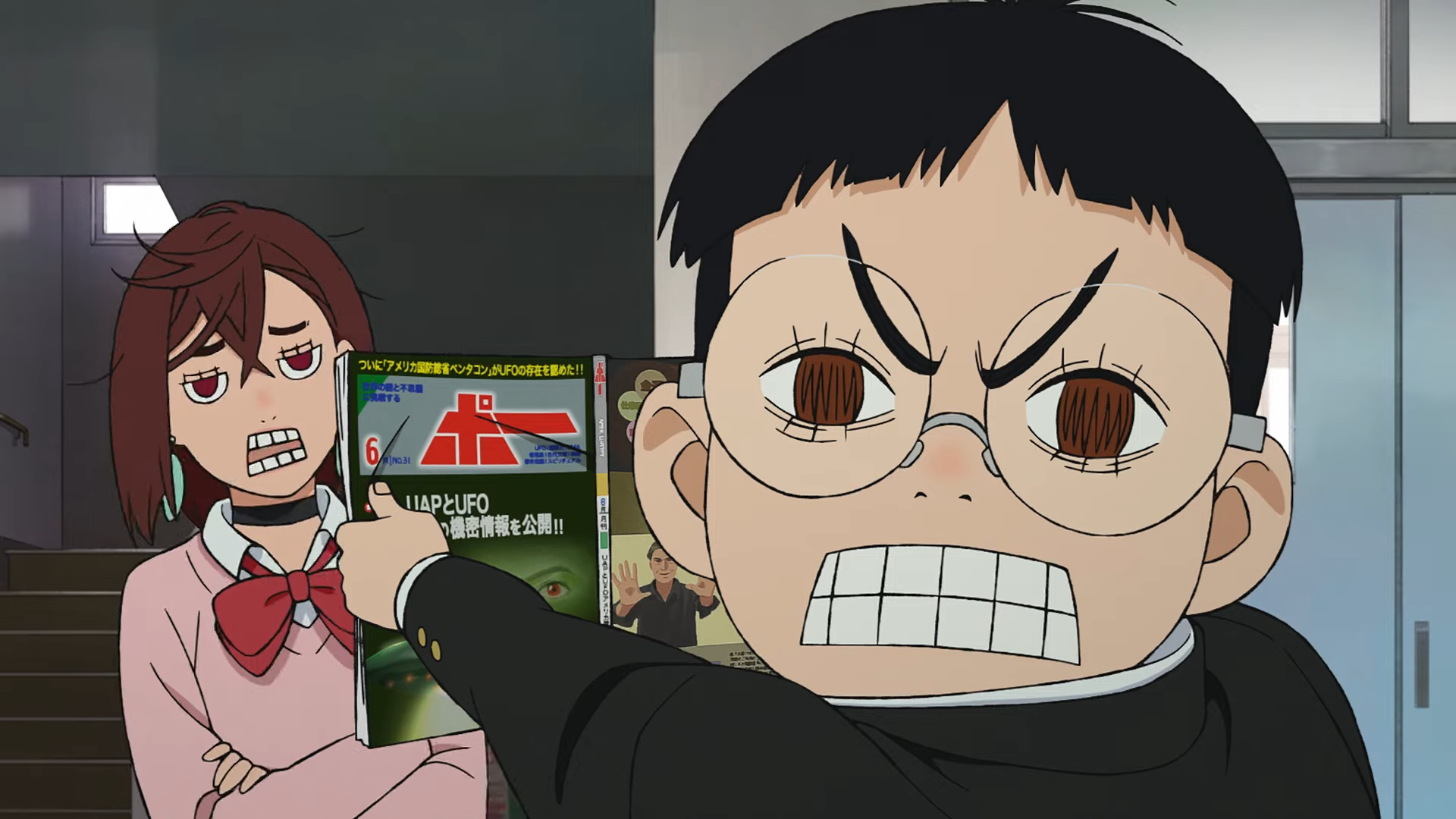
Event 12 is not a single scene. It is the realization that Dandadan’s plot is engineered for momentum. It follows a consistent pattern:
- A bizarre incident creates a new rule
- The rule forces a new alliance
- The alliance reveals a new vulnerability
- The vulnerability triggers a bigger threat
- The threat pays off a character beat (often romantic or friendship-based)
That pattern is why the story “clicks” for so many readers. The madness is not random. It is a vehicle for character development. Momo’s toughness is repeatedly tested by fear and responsibility. Okarun’s insecurity is repeatedly tested by courage and devotion. Their relationship grows because the plot keeps putting them in scenarios where they must choose each other, even when they are embarrassed, scared, or outmatched.
Dandadan also benefits from tonal contrast. Horror scenes feel scarier because you were laughing seconds earlier. Romantic moments feel sweeter because the world is so hostile. Comedy feels earned because it is often a coping mechanism for stress. The plot is, in a sense, a pressure cooker that keeps changing temperature.
If you want the cleanest way to explain Dandadan to someone new: it is a supernatural action story where every fight is also a relationship milestone. That is why it sticks.
Where the Anime Leaves Off and How the Manga Expands the Story
If you are watching the anime and wondering whether you “get it” yet, the episode count helps you set expectations. With 24 episodes available as of January 2026, you have enough content to understand the main cast dynamic, the core power systems, and the series’ trademark blend of sci-fi and occult horror. You have also likely seen the story broaden from two leads into an ensemble with recurring allies and recurring threats.
Where anime viewers sometimes get stuck is expecting the plot to stabilize into one genre. Dandadan does not do that. The manga continues to widen the universe and to deepen the “aliens and yokai are both real” thesis through new arcs, new rules, and new forms of escalation. If the anime feels like a roller coaster, the manga is a theme park.
For readers who want to continue, the most practical approach is to pick up the manga at the start of the arc that follows the anime’s latest endpoint, then backtrack to compare key scenes that the adaptation may condense. Many fans do this by using ComicK for quick chapter navigation, because it makes it easy to jump between the “big moments” and see how the original panels handle tone, pacing, and comedic timing.
If you are writing a summary, here is the safest non-spoilery description of the manga’s direction: it keeps the same DNA (romantic tension, horror comedy, high-speed action), but it becomes more ambitious in worldbuilding and more confident in long-form emotional payoffs.
FAQ
1) How many episodes of Dandadan are there?
As of January 2026, the Dandadan anime has 24 episodes across two 12-episode seasons.
2) What is the plot of Dandadan in one sentence?
Two teens prove ghosts and aliens are real, gain supernatural powers, and fight escalating paranormal threats while their relationship grows.
3) Who are the main characters in Dandadan?
The core leads are Momo Ayase and Ken “Okarun” Takakura, with an expanding supporting cast of allies and rivals.
4) Is Dandadan more about aliens or ghosts?
Both. The series is built on the collision of extraterrestrial threats and yokai or curse-based horror.
5) Is Dandadan a romance?
It has strong romantic tension, but it is primarily an action supernatural thriller with rom-com energy.
6) Is Dandadan a horror anime?
It includes horror elements, including frightening imagery and possession-style threats, but it blends horror with comedy and action.
7) Does Dandadan have a clear story arc, or is it random?
It is coherent. Each new incident adds rules, allies, and consequences that connect to the larger mythos.
8) Is the anime faithful to the manga?
Broadly yes, though pacing and emphasis can vary. Comparing scenes in the manga on ComicK can highlight differences.
9) Can I start the manga after the anime?
Yes. Many viewers continue by starting at the arc immediately after the anime’s latest endpoint, then optionally rereading earlier chapters.
10) Why is Dandadan so popular?
Its appeal comes from genre-blending, high-speed set pieces, strong character chemistry, and the constant feeling that anything can happen.
Conclusion
What is the plot of Dandadan? It is a fast-escalating supernatural story where two teens awaken powers through a disastrous bet and then survive a chain of increasingly intense encounters with aliens, yokai, curses, and possession-level threats, all while their bond deepens into genuine partnership. With 24 anime episodes available as of January 2026, you can already see why the story “clicks”: every weird event is a step in a structured escalation, and every fight doubles as character growth. If you want the cleanest way to track how each arc builds on the last, a quick manga skim on ComicK can make the connections even clearer.
You may also like:
How does Dawn of the Dragon end? 5 Shocking Truths That Will Break Your Heart
Is Kaiju No. 8 Better Than Dandadan? 11 Powerful Points That Make One Clearly Win
Is Dandadan for Kids? 10 Intense Reasons It’s Better for Teens

Jessica is a content editor at ComicK, with experience tracking and curating information from a wide range of Manga, Manhwa, and Manhua sources. Her editorial work focuses on objectivity, verifiable information, and meeting the needs of readers seeking reliable insights into the world of comics.