
Berserk is a brutally human dark fantasy about Guts, a lone mercenary fighting through war, demons, and destiny after a life-defining betrayal leads to the infamous Eclipse. If you are coming from the anime, note that Berserk is split across adaptations with 25 episodes in the 1997 series, 24 episodes in the 2016–2017 TV run, and 13 episodes in the Golden Age Arc Memorial Edition.
At ComicK, our team maps the story in a spoiler-aware, arc-based way so new readers understand what to watch, what to read, and why Berserk’s themes of trauma, ambition, and free will hit so hard. Next, you’ll uncover 10 dark secrets behind Guts, Griffith, and the Eclipse that finally make the series click.
What is Berserk about, in plain English
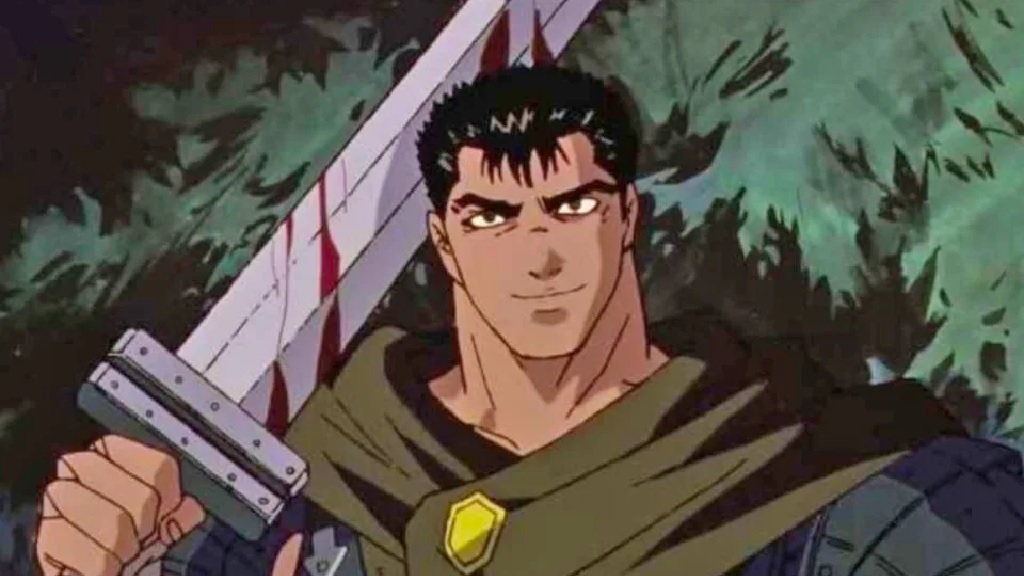
Berserk is a seinen dark fantasy manga (with anime adaptations) about a man who refuses to stop fighting even when the universe seems designed to crush him. The story follows Guts, a mercenary with a massive sword and a history soaked in violence, as he moves from battlefield survival to something far worse: a supernatural war against demonic beings known as Apostles and the godlike entities behind them.
The narrative is best understood in two layers. On the surface, it is a revenge-driven quest. Guts becomes a “Black Swordsman” figure, cutting through monsters in a grim medieval world where kings, knights, and peasant armies are just as dangerous as the demons. But underneath, Berserk is a story about how people are shaped by trauma and how they either rebuild themselves or let their wounds become their identity. That is why readers talk as much about Casca, Griffith, and the Band of the Hawk as they do about battles.
The series is also known for a turning point often referred to as the Eclipse, an event that reframes everything you thought the story was about. Berserk uses that moment not only as shock, but as a thesis: ambition without limits can become monstrous, and survival can demand a price that feels impossible to pay.
If you want one sentence: Berserk is about a man fighting to reclaim agency in a world that keeps trying to turn him into a weapon.
The world of Berserk: medieval war, cosmic horror, and a collapsing moral order
Berserk’s setting feels like a grounded medieval Europe at first: muddy battlefields, mercenary bands, castle sieges, and political maneuvering in a kingdom often associated with Midland. That realism matters because it makes the later supernatural escalation more terrifying. When demons appear, they do not replace human cruelty. They amplify it. Berserk repeatedly shows that the line between “monster” and “human” is thinner than anyone wants to admit.
In practical terms, the world is built on three pressures that constantly collide. The first is war. Armies are not heroic institutions here; they are machines that chew up bodies, reputations, and conscience. The second is religion and power, often embodied by institutions that promise order while feeding off fear. The third is the occult, where fate is not a metaphor but a force with symbols, rituals, and consequences.
Berserk’s horror is not only gore or jump scares. It is existential. People can do everything “right” and still lose. Innocents can suffer without meaning. Yet the series never collapses into nihilism. It uses darkness to ask what courage looks like when the world offers no guarantees.
This is also why the series feels so immersive. The background art, armor design, and geography make the kingdom believable, which makes the appearance of entities like the God Hand feel like reality itself has been violated. When the story later expands into high fantasy, it does so as an invasion, not a genre shift. The medieval world does not “become fantasy.” It is forced to endure it.
Guts: Why the Black Swordsman is more than a revenge protagonist
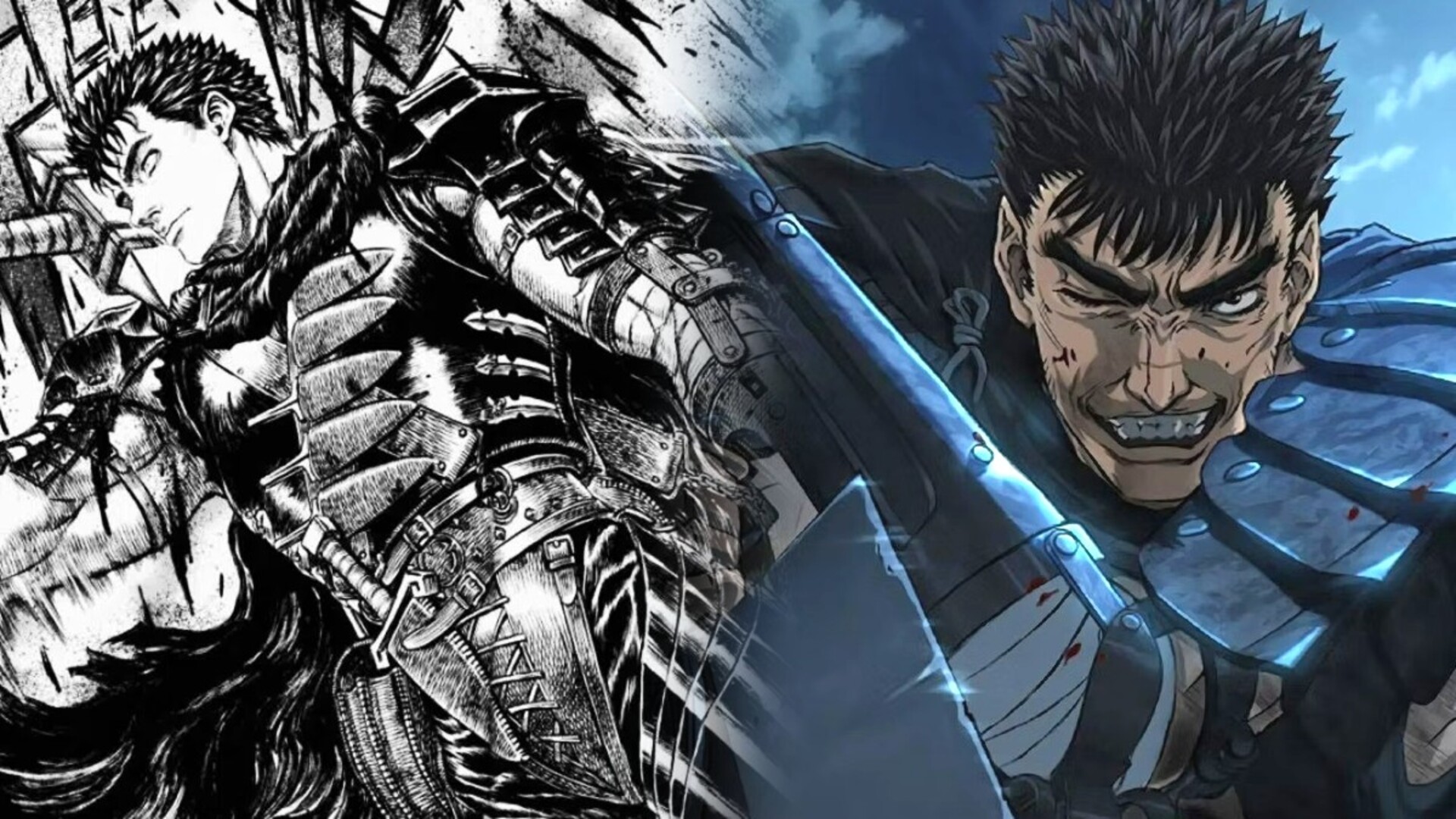
Guts is often summarized as “the guy with the giant sword,” but that shorthand misses what makes him one of manga’s most layered protagonists. His defining trait is not strength. It is endurance. Berserk builds Guts as someone who has been hurt so early and so often that survival becomes his default language, even when survival costs him relationships, rest, and self-control.
His weapon, the Dragonslayer, is not just a cool design. It is symbolic. It represents brute force in a world where brute force is often useless against fate. Guts swings that blade like someone trying to carve a path through inevitability. That is why he can feel terrifying even to allies. He is a person who has learned that hesitation gets you killed, and he carries that lesson into moments where gentleness would be safer.
The “Black Swordsman” persona also hides a key conflict: Guts wants connection, but he does not trust that connection can last. His arc is not simply “kill the villain.” It is learning whether he can live as more than a reaction to pain. That is why characters like Puck matter. Comic relief is not filler here; it is oxygen. It is the story reminding you that Guts is still human.
Berserk’s most compelling Guts moments are not the biggest fights. They are the small choices: whether he protects someone, whether he walks away, whether he accepts help, whether he lets rage drive him. In that sense, Guts is not merely a warrior. He is a case study in what trauma does to identity, and what it takes to rebuild an identity without lying to yourself.
Griffith and the Band of the Hawk: charisma, ambition, and the price of a dream
If Guts is the series’ embodiment of survival, Griffith is its embodiment of ambition. He is beautiful, brilliant, and terrifyingly focused, a commander who can turn a ragtag mercenary group into a symbol that kings fear. The Band of the Hawk is where Berserk becomes more than a monster-hunting saga. It becomes a human drama: loyalty, friendship, class mobility, and the intoxication of being part of something bigger than yourself.
Griffith’s power is not only combat skill. It is narrative gravity. People orbit him because he gives them purpose. In a violent medieval world, purpose can feel like salvation. That is why the Band of the Hawk is so beloved: it shows community forming in a place where community should not survive.
But Berserk is ruthless about a specific question: what happens when someone’s dream requires other people to become tools? Griffith’s philosophy treats everything as sacrifice in service of a future he believes he deserves. That worldview makes him effective, and it also makes him dangerous. The series does not present him as a cartoon villain. It presents him as someone whose virtues are inseparable from his potential for cruelty.
Guts and Griffith’s relationship is the engine of the story. It is not simply rivalry. It is mutual recognition, dependency, and the tension between freedom and belonging. For many readers, the tragedy of Berserk is that the Band of the Hawk feels like the closest thing to “home” the characters ever get, which makes what comes later feel like the destruction of possibility itself.
The Eclipse: the dark secret that transforms Berserk’s entire meaning
The Eclipse is the moment that makes Berserk infamous, but its importance is not just about shock. It is structural. Up to that point, Berserk can feel like a grounded war epic with hints of the supernatural. The Eclipse reveals the true scale of the story: there are forces beyond kings, beyond armies, beyond human ethics, and they can rewrite lives with ritual precision.
At a high level, the Eclipse is a catastrophe where ambition, cosmic mechanics, and betrayal collide. It is where the concept of sacrifice becomes literal and irreversible. Berserk uses it to draw a line between “human evil” and “metaphysical evil,” then immediately shows that the two are entangled. In other words, the worst monsters are not always non-human. Sometimes they are human choices amplified by supernatural opportunity.
For Guts, the Eclipse is not simply “the worst day of his life.” It becomes the reason he cannot live normally again. It marks him, emotionally and metaphysically, turning his fight into something that follows him. For Casca, it is a trauma that reshapes her entire trajectory, and it is one of the reasons Berserk requires serious content awareness for new readers.
For Griffith, the Eclipse is where the story forces the reader to confront what his dream truly means. The “dream” stops being inspirational and becomes predatory. Berserk’s genius is that it makes you understand the seduction of the dream first, then shows you the cost.
If you are new and worried about spoilers, here is the safe framing: the Eclipse is the narrative gate. Before it, Berserk is about war and ambition. After it, Berserk is about survival against both monsters and destiny.
Themes that make Berserk hit so hard: fate, free will, trauma, and love
Berserk is often described as dark, but darkness is not its purpose. Its purpose is contrast. The series uses horror to make small lights matter: a hand offered, a campfire shared, a joke in the middle of despair. That is why it resonates beyond the shock reputation.
One major theme is fate vs free will. Berserk repeatedly introduces symbols of inevitability: prophecy-like structures, occult artifacts such as a Behelit, and cosmic entities that speak as if history is already decided. But it also repeatedly shows characters refusing to behave as if they are trapped. Guts is the clearest example. His entire identity is refusal. Even when his refusal is self-destructive, it is still choice.
Another theme is trauma and recovery. Berserk does not treat trauma as a single dramatic scene. It treats it as a long-term condition that affects sleep, trust confirm, and emotional regulation. This is where Berserk can feel painfully real despite demons and magic. The story’s emotional arc is about whether people can rebuild after being broken, and whether love can exist without erasing scars.
A third theme is power and identity. Characters are tempted by shortcuts: strength, status, immortality, control. Berserk asks what you become when you accept those bargains. That question applies to villains, but it also applies to heroes when they begin to treat violence as the only language they know.
Ultimately, Berserk is dark because it is honest about what survival can cost. It is also hopeful because it insists that connection can still matter, even when it cannot fix everything.
How to start Berserk: manga reading order, anime differences, and the safest entry point
If you want the best experience, start with the manga, because it is the definitive version and contains the full scope of the story, including arcs and character development that adaptations compress or omit. The manga is also where Kentaro Miura’s legendary artwork and paneling shine: grotesque horror, intricate armor, expressive faces, and cinematic action choreography.
A practical beginner roadmap:
- Start at Volume 1 and read in publication order. Berserk uses framing and flashback structure on purpose. Skipping around reduces impact.
- Expect early chapters to feel harsher. Many readers find the series becomes more emotionally expansive after the Golden Age material reveals context.
- Track arcs loosely rather than obsessing over arc names. Major beats include the Black Swordsman setup, the Golden Age journey, and later expansions into broader high fantasy.
What about the anime?
- The 1997 anime is beloved for atmosphere and music, but it adapts a limited portion and omits key elements.
- The 2016–2017 TV adaptation covers later material but is widely criticized for inconsistent visuals and presentation choices.
- The Golden Age Arc films and the Memorial Edition retell the Golden Age with modern production, but they still do not replace the manga’s full experience.
If you want a safe strategy, use the manga as your primary path and treat anime adaptations as companions, not replacements. If you are reading online, ComicK readers typically prefer platforms that present chapters cleanly with reliable page order, because Berserk’s art benefits from uninterrupted flow.
Content warnings and who Berserk is for: an honest checklist
Berserk is not “edgy for fun.” It is intense because it depicts a cruel world and refuses to soften consequences. That said, it contains content that many readers should approach carefully.
Expect:
- Graphic violence and body horror
- Sexual violence and exploitation themes
- Psychological trauma, grief, and despair
- Religious imagery and cult-like fanaticism
- Dehumanization, torture, and war atrocities
If you are sensitive to any of these, it is not a failure to skip Berserk. The series can be a masterpiece and still be a bad match for your current mental state. A useful approach is to treat Berserk like a heavy film: do not binge it when you are exhausted. Read in deliberate sessions, take breaks after major turning points, and do not force yourself through chapters that are harming your wellbeing.
Who tends to love Berserk:
- Readers who enjoy dark fantasy, gothic horror, and medieval epics
- Fans of character-driven tragedy and moral complexity
- People who appreciate detailed art, intricate worldbuilding, and long-form arcs
Who might bounce:
- Readers looking for light shonen energy or comedic pacing
- Anyone wanting clean “hero wins, villain loses” comfort arcs
- Anyone who dislikes explicit brutality and severe themes
At ComicK, we usually frame it simply: Berserk is rewarding, but it demands readiness. If you are ready, it can become one of the most memorable stories you ever read.
Why Berserk matters: legacy, influence, and what it inspired across media
Berserk’s influence is everywhere once you know what to look for. Its DNA appears in dark fantasy games, modern anime aesthetics, character archetypes, and the broader popularity of grim medieval settings. The image of a lone warrior facing impossible odds with an oversized sword has become a genre language. But Berserk’s deeper influence is tonal: it proved that a fantasy story could be grotesque, philosophical, and emotionally tender in the same chapter.
The series is also celebrated for Kentaro Miura’s craft. His line work creates weight. Armor looks like metal, not decoration. Monsters look biologically wrong in a way that triggers real unease. Panels breathe. The pacing can shift from kinetic battle to quiet reflection without losing tension. That level of artistry is why Berserk is often cited as a benchmark for manga illustration.
Berserk’s character legacy is equally important. Guts is a foundational modern anti-hero not because he is cool, but because he is psychologically coherent. Griffith is a foundational “beautiful villain” not because he is stylish, but because his ambition feels seductively human before it becomes monstrous. Casca remains one of the most debated and discussed characters in the series because her suffering and strength are central, not ornamental.
Finally, Berserk endures because it never reduces itself to its darkest moments. Even after the Eclipse, it continues to explore companionship, recovery, and the possibility of peace, however fragile. That balance is rare, and it is why Berserk remains a reference point across fandoms.
FAQ: Quick answers for new Berserk readers
1) What is Berserk about in one sentence?
A traumatized mercenary fights fate, demons, and betrayal in a brutal dark fantasy world while searching for agency and connection.
2) How many episodes does Berserk have?
There are multiple adaptations: 1997 has 25 episodes, 2016–2017 has 24 episodes, and Memorial Edition has 13 episodes.
3) Is Berserk finished?
The manga continues beyond Kentaro Miura’s passing, with the story being carried forward by his collaborators based on his plans.
4) Is Berserk anime a complete adaptation?
No. No anime adaptation covers the full manga story.
5) Is the Eclipse a spoiler?
Yes, it is a major turning point. Many readers consider it the point where the story’s true scale is revealed.
6) Is Berserk shonen or seinen?
Berserk is a seinen series, aimed at mature audiences.
7) Should I start with the 1997 anime or the manga?
The manga is the best starting point for the full story and the definitive art.
8) Is Berserk too dark for beginners?
It can be. It contains graphic violence and sexual violence themes, so content readiness matters.
9) Who are the main characters besides Guts?
Key figures include Griffith, Casca, and later companions who join Guts on his journey.
10) Why is Berserk considered a masterpiece?
Because of its art quality, long-form character writing, thematic depth, and influence on modern dark fantasy storytelling.
Conclusion
If you came here for a quick anchor, Berserk’s anime adaptations total 25 episodes for the 1997 series, 24 episodes across 2016–2017, and 13 episodes for the Memorial Edition, with films covering the Golden Age as well.
But the real answer to what is berserk about is larger than episode counts: it is a dark fantasy epic about Guts fighting to remain human after betrayal and cosmic horror try to turn him into nothing but violence.
Berserk is brutal, but not empty. It is obsessed with the idea that choice still matters when the world says it does not.
If you start with the manga and read it with the right expectations, you will understand why so many readers call it unforgettable, and why ComicK fans keep returning to it for the kind of storytelling that does not blink first.
You may also like:
How Long Will Demon Slayer Be in Theatres? 9 Shocking Factors That Decide the Run
Who Animated Demon Slayer? 9 Must-Know Secrets Fans Will Love
How Does Demon Slayer End? 11 Epic Answers That Finally Explain Everything

Jessica is a content editor at ComicK, with experience tracking and curating information from a wide range of Manga, Manhwa, and Manhua sources. Her editorial work focuses on objectivity, verifiable information, and meeting the needs of readers seeking reliable insights into the world of comics.