
The strongest character in Black Clover is Lucius Zogratis. In the final arc, Lucius stacks an endgame toolkit that includes Soul Magic, Time Magic, and layered stolen or assimilated attributes, letting him operate above normal captain-tier scaling and turning the conflict into a kingdom-level crisis.
A quick note from the ComicK team before we go deeper: “strongest” in Black Clover is not just raw mana. It is how many ways a character can win, how consistently they can do it across matchups, and whether the story treats them as the ceiling everyone else must break. Lucius checks every box.
Who Is the Strongest Character in Black Clover? The verdict in one sentence
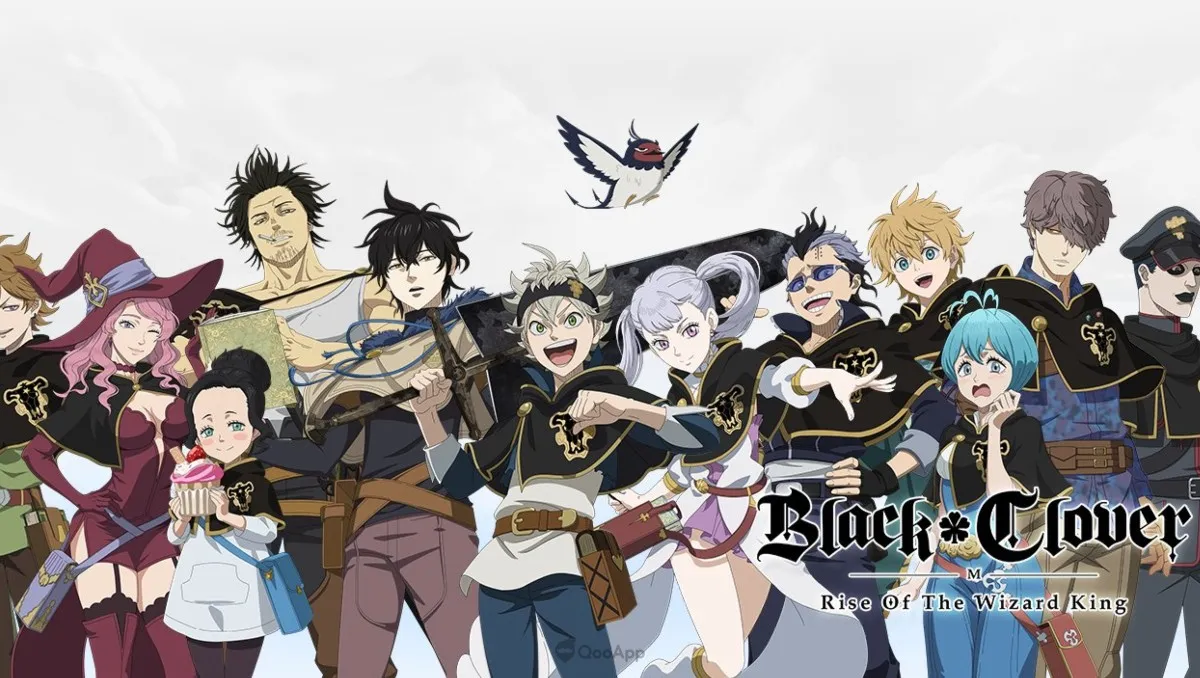
Lucius Zogratis is the strongest character in Black Clover right now because he can manipulate time, rewrite souls, purify and weaponize devils into Paladins, and scale his influence across the entire Clover Kingdom through endgame-level spells and control.
What “strongest” means in this article
Black Clover power debates get messy because people argue from different definitions. Here is the standard we use:
- Overall dominance: Can this character overwhelm top tiers, not just beat mid tiers?
- Versatility: Do they have multiple win conditions (hax, battlefield control, immortality, army creation)?
- Scalability: Can their power affect entire regions or the whole kingdom, not just one duel?
- Narrative ceiling: Is the story positioning them as the final obstacle that redefines what “peak” looks like?
Under that framework, Lucius is the clearest answer in the manga’s final arc.
10 Unmissable Feats That Prove Lucius Is the Strongest
Feat 1: Time Magic makes fights about inevitability, not exchanges
Time Magic isn’t “strong” in the normal sense. It changes the rules. When a character can distort time, they stop playing fair combat and start controlling whether combat happens on equal terms at all.
Lucius’s advantage is not only that he can act fast. It is that he can distort tempo in ways that force opponents into losing positions:
- He can steal turns by accelerating or suppressing the opponent’s ability to respond.
- He can convert reaction into prediction, because time manipulation naturally rewards planning, not improvisation.
- He can push the fight toward inevitability, where opponents are always catching up to a future he already chose.
In a verse where many top tiers are still bound by “who hits harder,” time manipulation is a category advantage.
Feat 2: Soul Magic attacks the blueprint of a person, not their armor
Raw power can be blocked, dodged, or outlasted. Soul manipulation is different. Lucius’s Soul Magic targets what a person is, not what they can tank.
Why that makes him the strongest overall:
- Durability doesn’t solve it. Being physically tough does not automatically protect you from soul interference.
- It can bypass conventional defenses. If the system allows soul-level rewriting, defensive scaling becomes less relevant.
- It turns individual power into mass power. Soul mechanics can be applied beyond a one-on-one duel.
This is part of why Lucius feels like a final-boss design. The series elevates the threat from “can you survive hits” to “can you preserve identity and autonomy.”
Feat 3: He creates Paladins by purifying devils and incarnating their power in humans
This is one of the clearest “final arc” power moves in the series: Lucius converts devil power into a purified form and uses it to create Paladins.
What makes this feat so definitive:
- Force multiplication: He doesn’t just become stronger; he manufactures elite units.
- Consistency: If the process is repeatable, every new Paladin raises the ceiling of the war.
- Durability escalation: Paladins are framed as extremely hard to kill, pushing battles into “endgame rules.”
In power terms, Lucius stops being one opponent and becomes a power-production system.
Feat 4: He absorbs apex devil power, stacking the verse’s top resources into one body
A major indicator of “strongest character” status is when the story lets someone take the strongest components from the power ecosystem and consolidate them.
Lucius’s threat level increases because he doesn’t remain limited to “his original kit.” He stacks and upgrades:
- He takes top-tier devil power as a resource.
- He integrates it into a broader plan.
- He combines it with time and soul mechanics.
This is why normal captain comparisons become less meaningful. You’re no longer debating “who is stronger in a duel.” You’re dealing with a character engineered to be the apex.
Feat 5: He turns the final war into an industrial-scale conversion campaign
Many villains get one elite form or one trump spell. Lucius goes bigger: he restructures the conflict itself by producing a class of endgame opponents (Paladins) in a systematic way.
Why that proves “strongest”:
- Battlefield control isn’t only positional; it’s organizational.
- He dictates the enemy roster the heroes must fight.
- He forces resource drain across the entire hero side, because multiple high-tier threats exist simultaneously.
The strongest character in a late-stage shonen often wins by logistics. Lucius plays that game.
Feat 6: He weaponizes emotional leverage by converting key people into endgame threats
Converting powerful individuals is already dangerous. Converting emotionally important individuals is worse, because it attacks the heroes’ decision-making.
Lucius demonstrates strength not only in magic, but in strategic cruelty:
- He can create opponents who destabilize heroes psychologically.
- He can force hesitation, divided attention, and moral conflict.
- He can turn “saving someone” into a tactical vulnerability.
That combination of power and psychological warfare is a classic hallmark of the true final antagonist.
Feat 7: He generates clones, multiplying the “final boss” across the battlefield
Clones are not impressive when they’re fragile. They become terrifying when they are:
- strong enough to demand elite-level responses,
- numerous enough to stretch captains thin,
- and coordinated enough to prevent the heroes from focusing the real target.
Lucius’s cloning capability changes the war structure:
- Even if a hero wins a battle, it may only be against a copy.
- Even successful strategies must be repeated under fatigue.
- The heroes cannot simply “group up and rush the boss” without consequences.
This is what separates a strong villain from an overwhelming one: the ability to overload the opposition’s capacity.
Feat 8: He imposes large-scale control over the Clover Kingdom, turning the nation into the arena
A reliable “strongest character” marker is scale. When the fight’s scope becomes national, you’re no longer in normal arc territory.
Lucius is positioned as a threat capable of:
- influencing the entire kingdom as a functional battlefield,
- sustaining massive magic effects,
- forcing the heroes into an endgame mission rather than a normal duel.
In practical terms, this means:
- The environment stops being neutral.
- The heroes must fight while also navigating an imposed system.
- Victory becomes “stop the outcome,” not “win a match.”
Feat 9: He expands his spell access beyond a normal mage’s limits
Lucius’s endgame threat is defined by how broad his toolkit becomes. A normal top-tier mage has an attribute and a ceiling. Lucius pushes beyond that model through mechanisms that effectively let him scale his options.
That matters because:
- It reduces the reliability of matchup planning.
- It makes “counterpicks” harder to maintain.
- It lets him adapt at a system level, not just a tactical level.
The strongest character is often the one who makes counters feel temporary.
Feat 10: The narrative frames him as the ultimate benchmark, not a “strong villain of the week”
Finally, the story positions Lucius as the final obstacle that demands peak evolution from the heroes.
This matters because Black Clover is not subtle about power ceilings:
- Early arcs establish captain-level threats.
- Mid arcs establish devil-level threats.
- The final arc establishes a threat that combines time manipulation, soul rewriting, conversion armies, and large-scale control.
When an antagonist is built to require the heroes’ ultimate growth, that antagonist is the benchmark the series wants you to treat as “the strongest.”
But what about Asta, Yuno, and the captains?

Many fans argue, reasonably, that Asta can beat almost anyone because anti-magic is a direct counter to conventional spellcasting. That can be true in specific matchups.
The clean way to reconcile the debate is:
- Asta is the best counterpick in the verse.
- Lucius is the strongest overall toolkit and system-level threat.
Asta can be the character most likely to defeat the strongest character without being the strongest character in every context.
Why the other top contenders fall just short
Asta (Anti-Magic, Devil Union)
Asta’s ceiling is extreme, but Lucius’s dominance is layered: time control, soul rewriting, conversion armies, and large-scale strategic pressure.
Yuno (top-tier prodigy)
Yuno is elite and consistent, but his toolkit remains closer to traditional “top mage” scaling, while Lucius operates at meta-system level.
Lucifero (King of Devils)
Lucifero is a raw-power monster, but Lucius’s threat is built on consolidating and optimizing apex resources rather than being only a stat check.
Mereoleona, Yami, and the captain class
They are terrifying in direct combat, but they do not represent the same combination of hax, scale, and resource multiplication that defines Lucius.
Why the “strongest” answer keeps changing in Black Clover
If you feel like “strongest character” shifts every arc, you’re not imagining it. Black Clover escalates through:
- new systems (devils, contracts, purification),
- new ceilings (king-tier entities),
- and hard counters (anti-magic making matchups volatile).
So the correct underlying question is often: “Strongest in what context?”
This article answers the most useful, search-intent-aligned version: overall strongest in the current canon landscape.
FAQ: Who is the strongest character in Black Clover?
Who is the strongest character in Black Clover right now?
Lucius Zogratis is the strongest overall in the final-arc framework.
Is Lucius stronger than Lucifero?
Overall, yes, because Lucius’s stacked toolkit and endgame mechanisms go beyond raw devil dominance.
Is Asta the strongest because of anti-magic?
Asta is arguably the strongest counter, but “overall strongest” depends on versatility, scale, and multiple win conditions.
Who is the strongest captain in Black Clover?
This remains debated, but Yami and Mereoleona are common candidates due to consistent top-tier combat showings.
Are Paladins stronger than captains?
Many Paladins are framed as endgame-level threats, often requiring elite responses and making fights harder to close cleanly.
What makes Lucius so overpowered compared to past villains?
He combines time manipulation, soul rewriting, conversion mechanics, cloning, and large-scale control, giving him multiple paths to victory.
Does Lucius have future vision?
His time-based capabilities are associated with seeing outcomes and planning around them rather than reacting in the moment.
Why does the manga discussion differ from anime-only debates?
Because later manga arcs introduce Lucius and final-arc mechanics that dramatically reshape the power ceiling.
Can anti-magic stop Lucius?
Anti-magic can disrupt devil-based mechanics, but Lucius’s power is layered systems and strategic scale, not one spell.
Will the strongest character change by the end?
It could, depending on the finale. But under current final-arc framing, Lucius remains the benchmark.
You may also like:
Black Clover Characters: 25 Powerful Favorites That Fans Absolutely Love
Is Black Clover Manga Finished? 5 Definitive Answers That Bring Relief
Why Does Momo Like Ken Takakura? 5 Heartwarming Truths That Hit Hard

Jessica is a content editor at ComicK, with experience tracking and curating information from a wide range of Manga, Manhwa, and Manhua sources. Her editorial work focuses on objectivity, verifiable information, and meeting the needs of readers seeking reliable insights into the world of comics.